
Infrastructure for Legal Tech
80
NPS (120-day target)
-16%
Referral redundancies
90%
Grant admin reduction target
2
Phases · client returned without RFP
The client
Poverty is dramatically reduced when everyone has access to legal representation.
Open Door Legal is an award-winning San Francisco nonprofit running a high-volume intake and referral operation across housing, immigration, and family law. When they came to me, they had two problems. One they knew about. One they discovered once we started working.
Product showcase
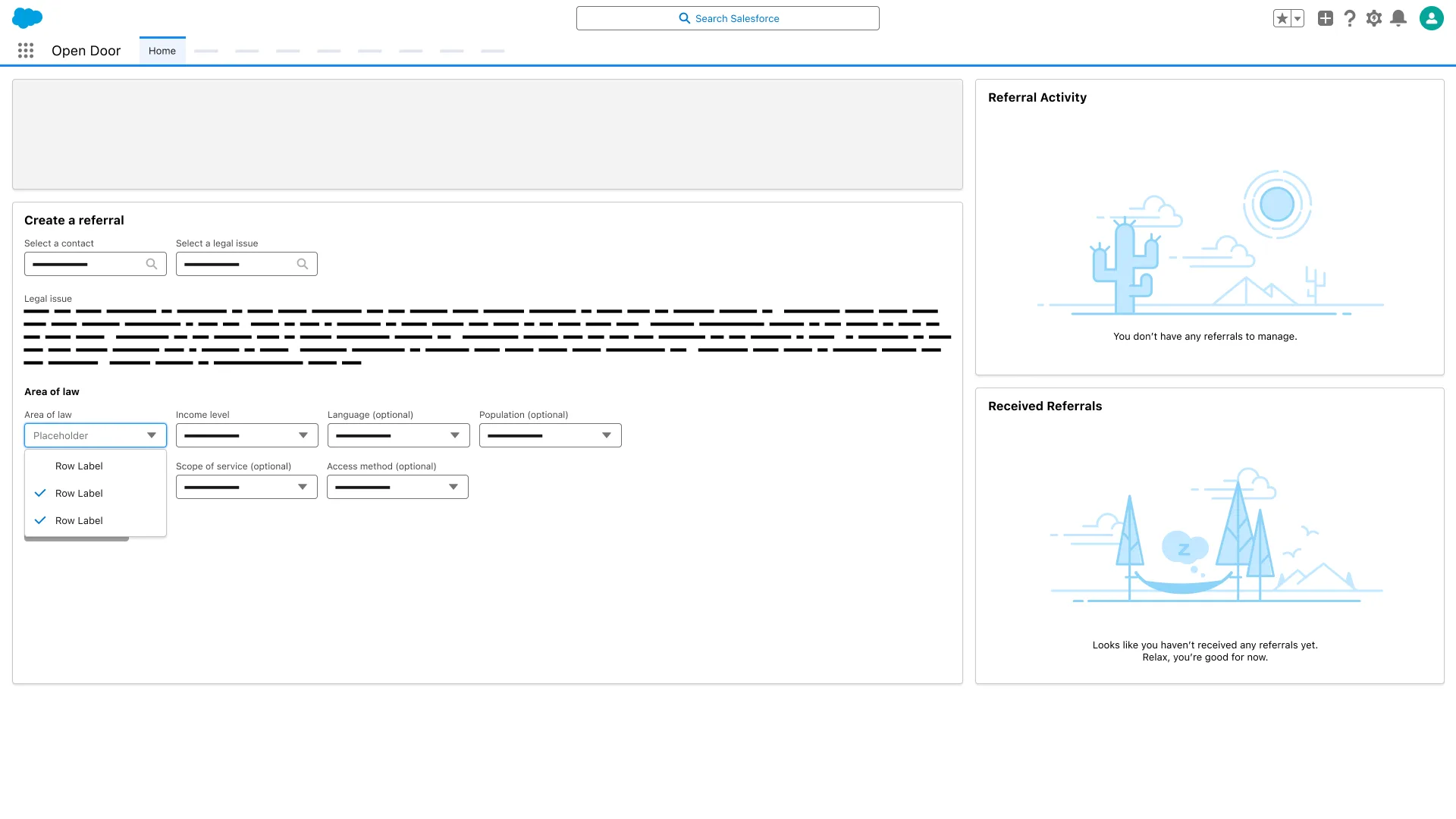
The brief: build a two-sided referral marketplace inside Salesforce—connecting ODL with partner legal organizations—so referrals could be created, sent, tracked, and received in one system.
Compliance
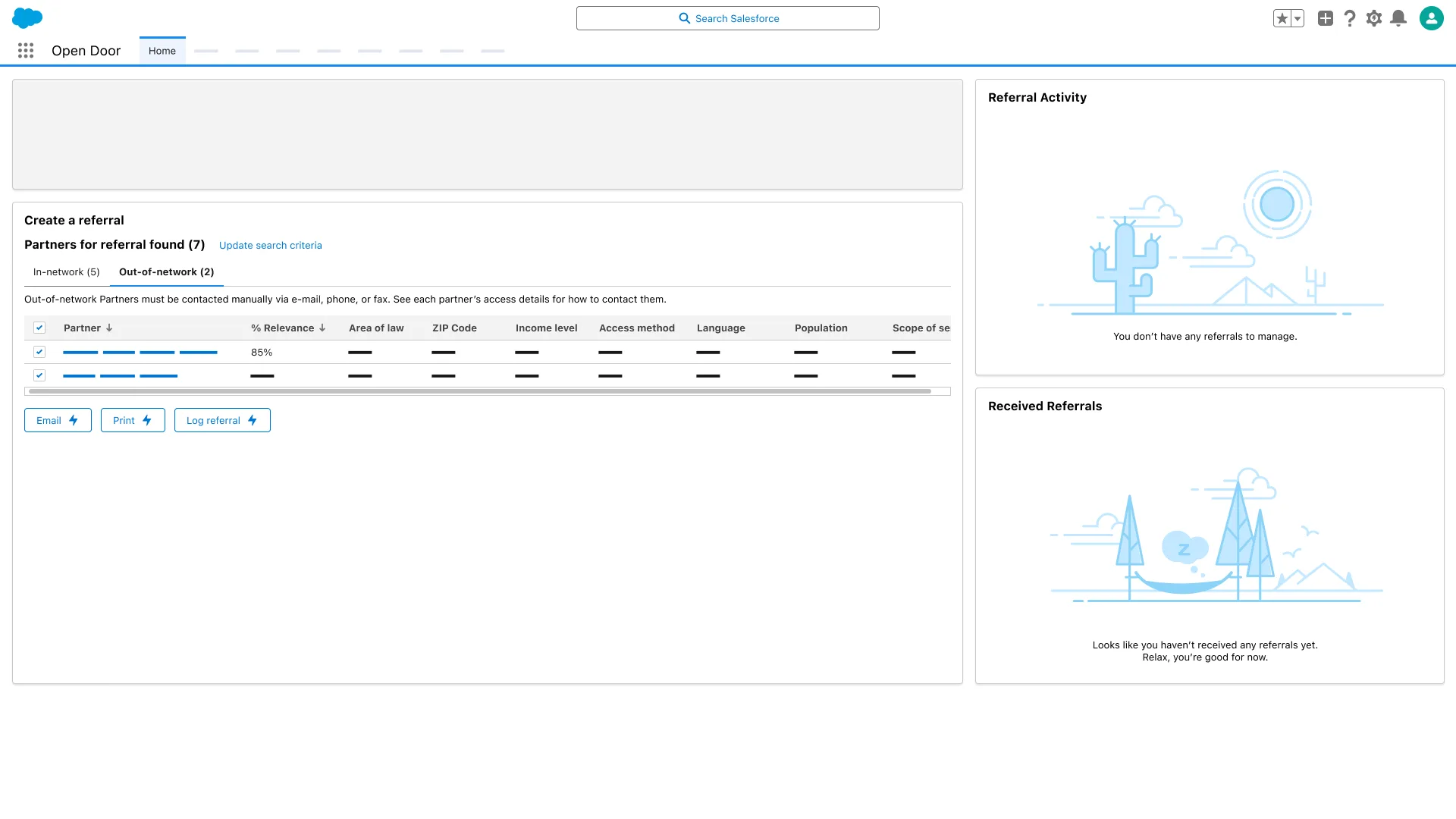
Onboarding
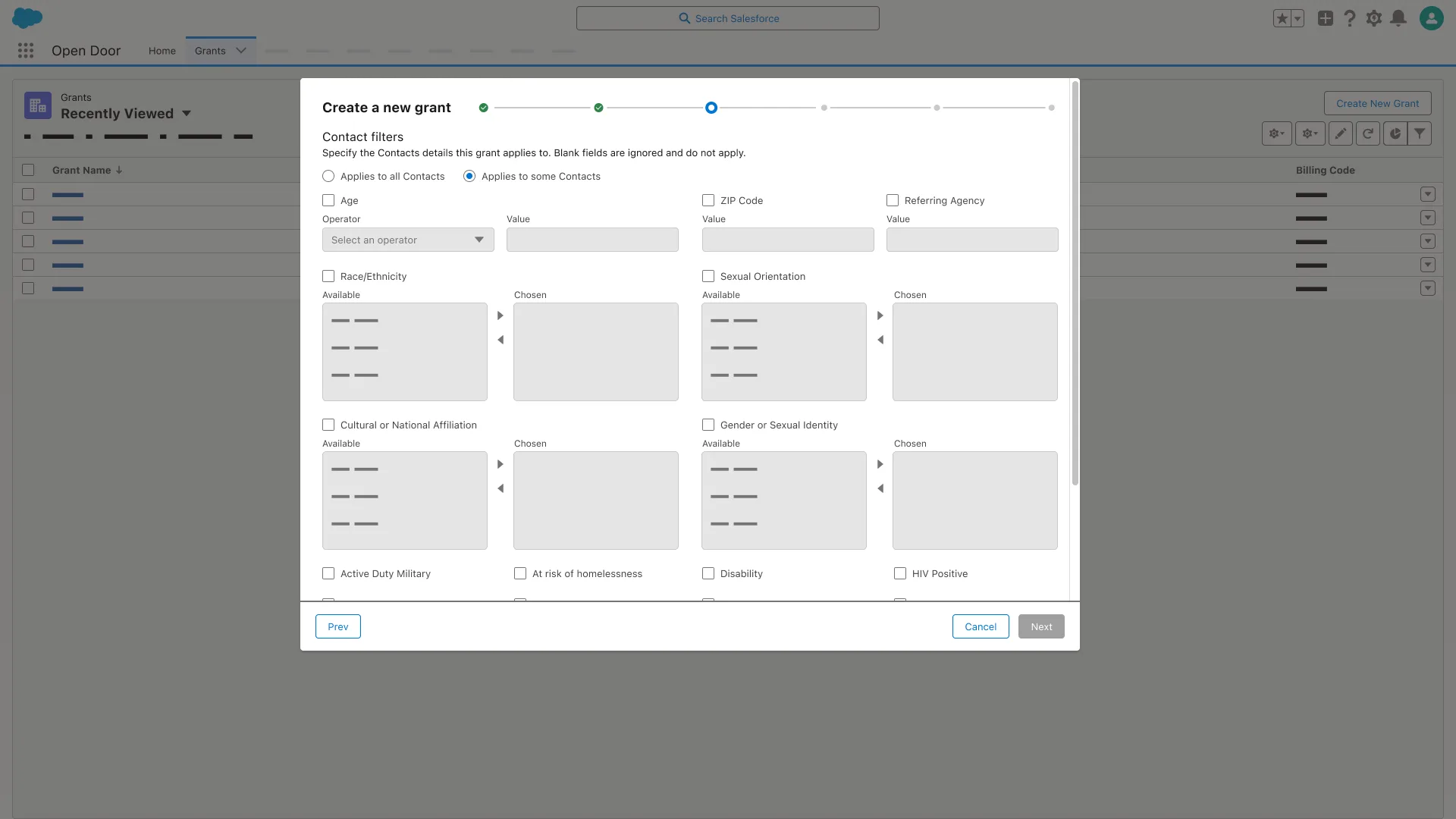
Management
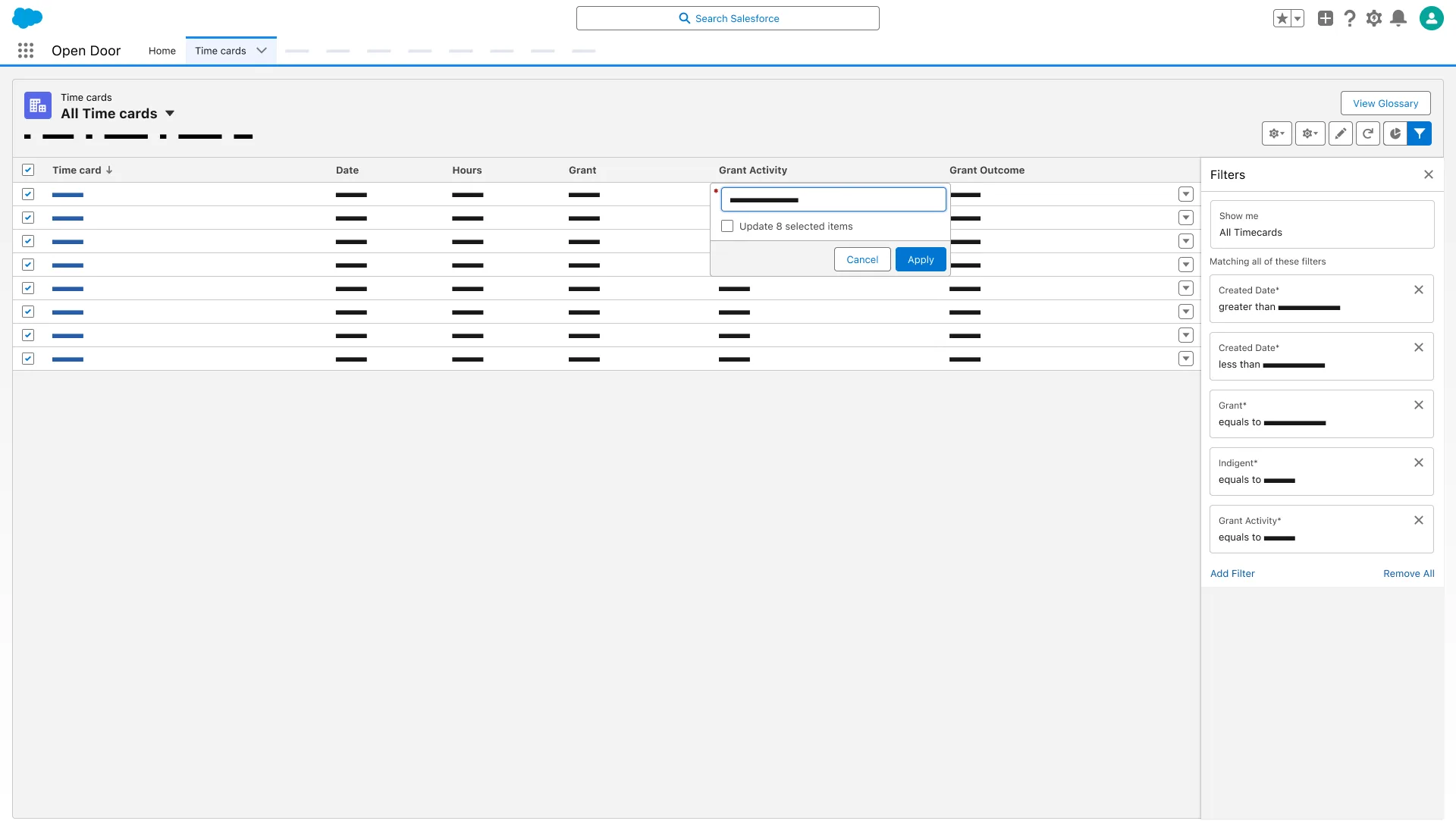
Workflows
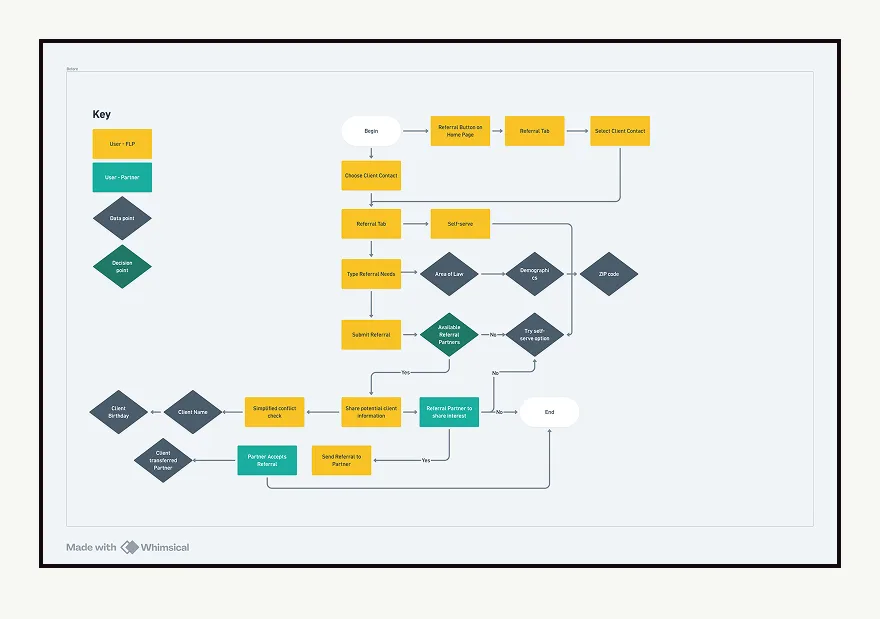
Phase 1 — The referral feature
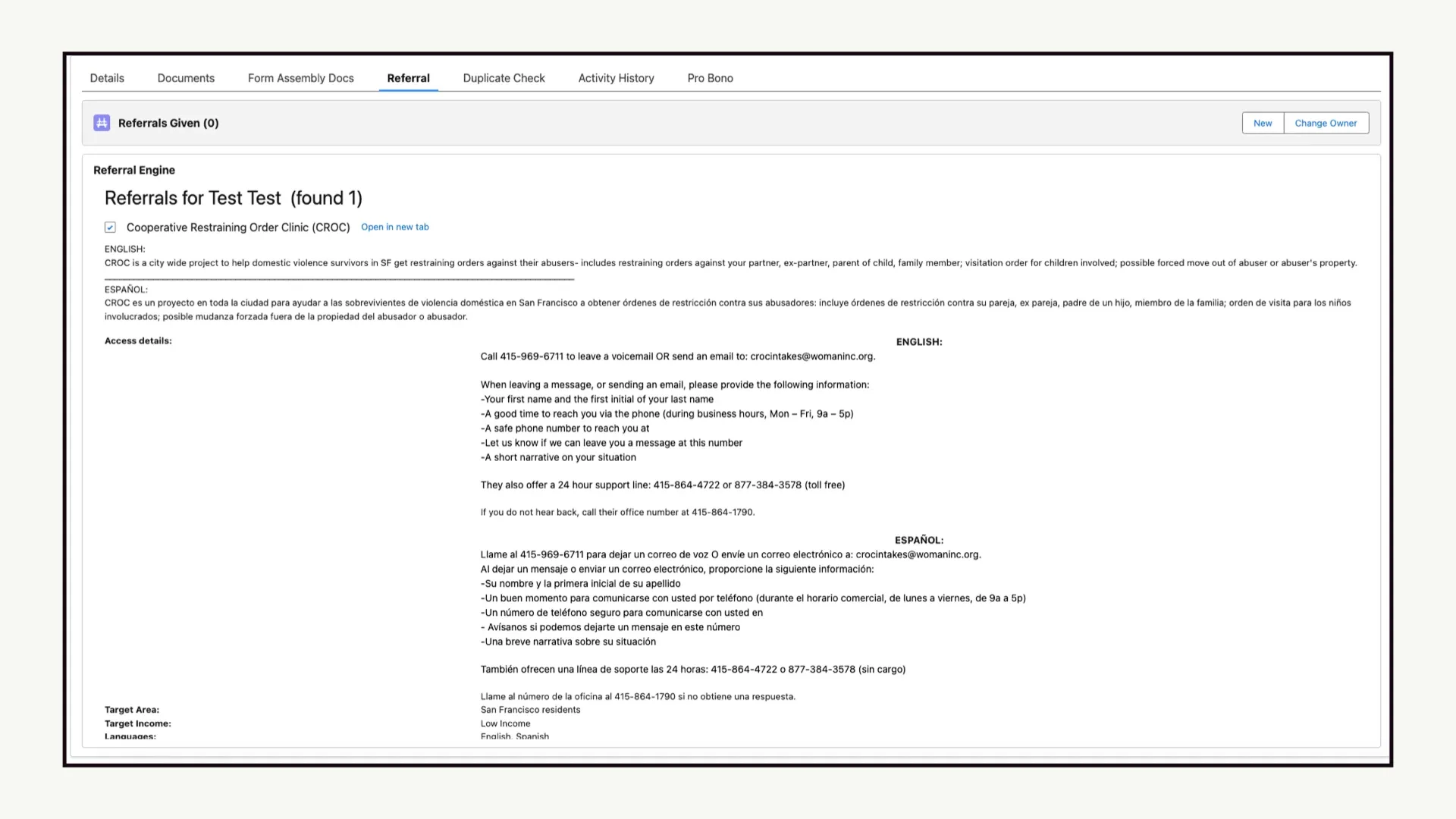
ODL's referral process was entirely manual.
When a client's needs fell outside what ODL could directly serve, admins searched an external database, retrieved contact details, and manually reached out by phone, email, fax, or post. Every referral was logged by hand. I was the sole designer—I drove research, defined user flows for both sides of the marketplace, owned all interaction design, and managed the client relationship through reviews and testing.
The constraint nobody warned me about
This wasn't just a workflow problem—it was a legal ethics problem.
Attorneys are bound by the California Rules of Professional Conduct. Sharing client information across a network triggers obligations around confidentiality, informed consent, and the duty to prospective clients. A California attorney reviewed the proposed system and issued a formal ethics opinion before we could ship.
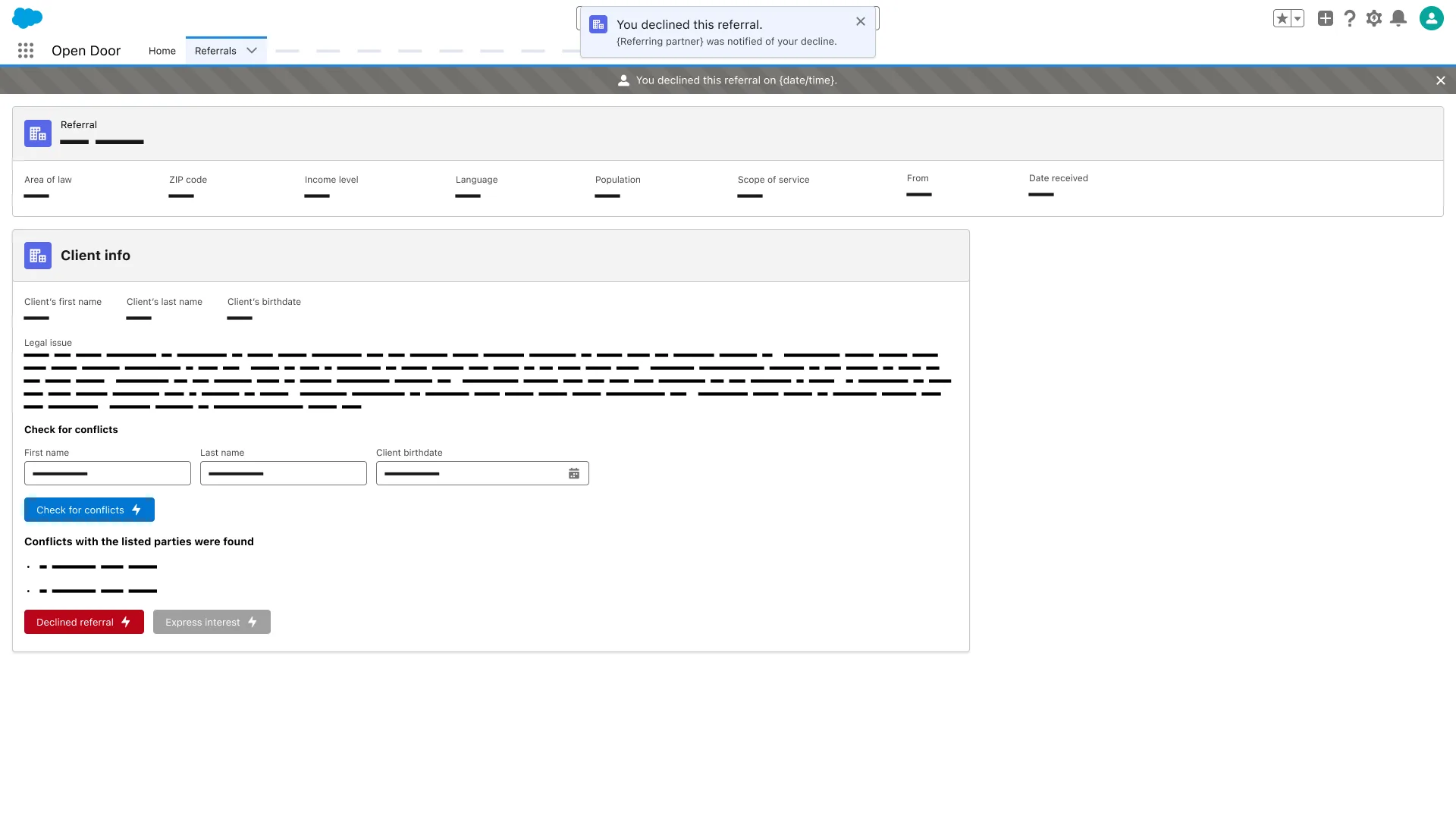
Informed consent had to be built into referral creation. Data visible to receiving organizations required explicit scoping. The simplified conflict check was deliberately limited to three fields: first name, last name, and date of birth. The templated outbound client summary only auto-generates after a clean conflict check clears.
The decisions that mattered
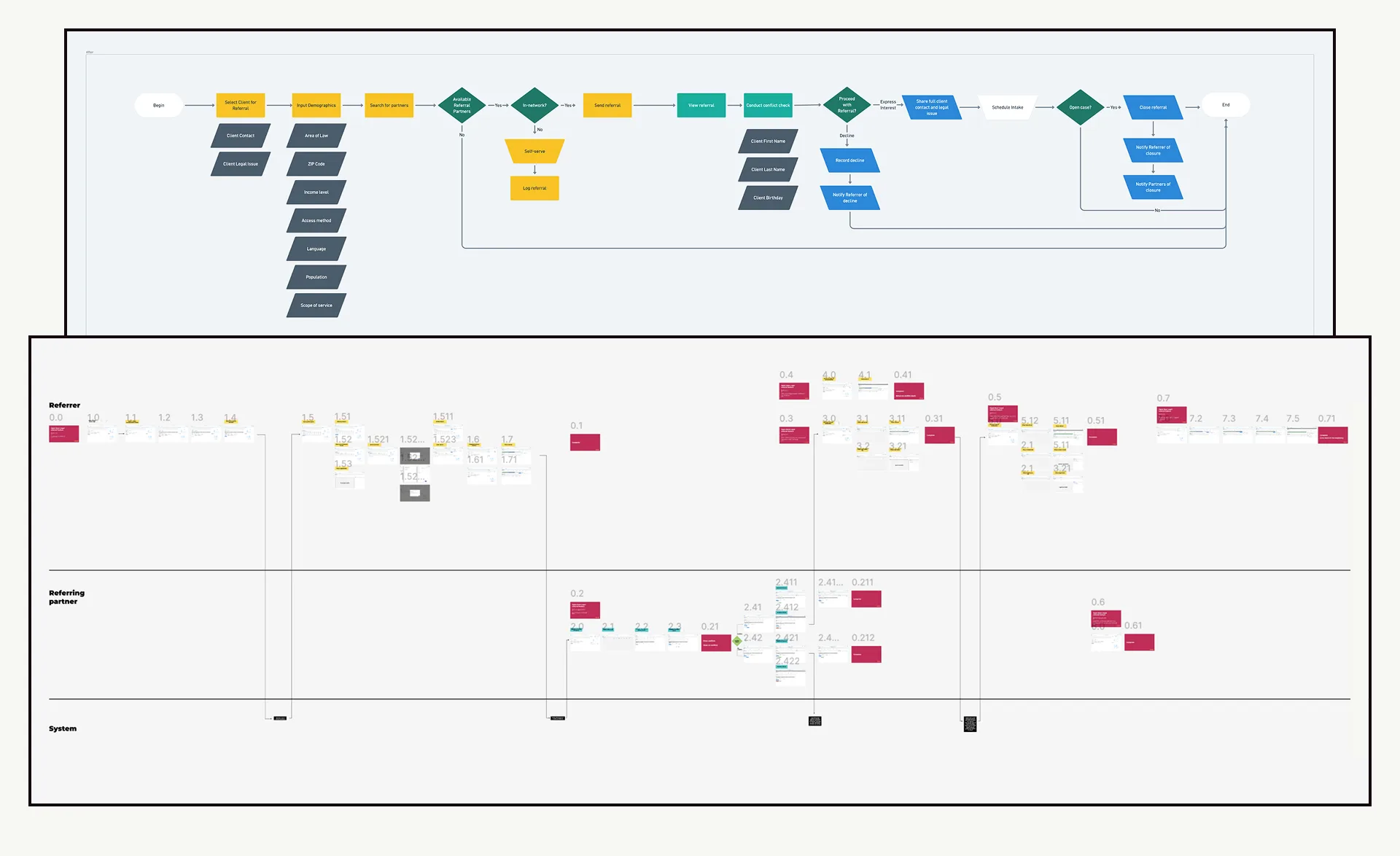
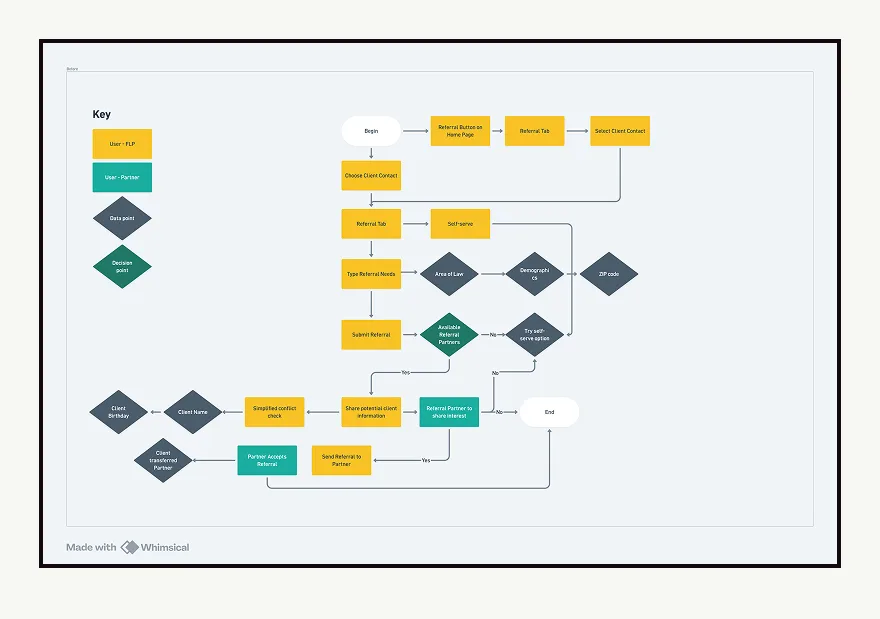
In-network and out-of-network as first-class concepts.
Not every organization ODL refers to is in Salesforce. I designed in-network and out-of-network as explicit, equal designations at referral creation—keeping the manual path inside the product rather than beside it.
The referral as a self-contained object.
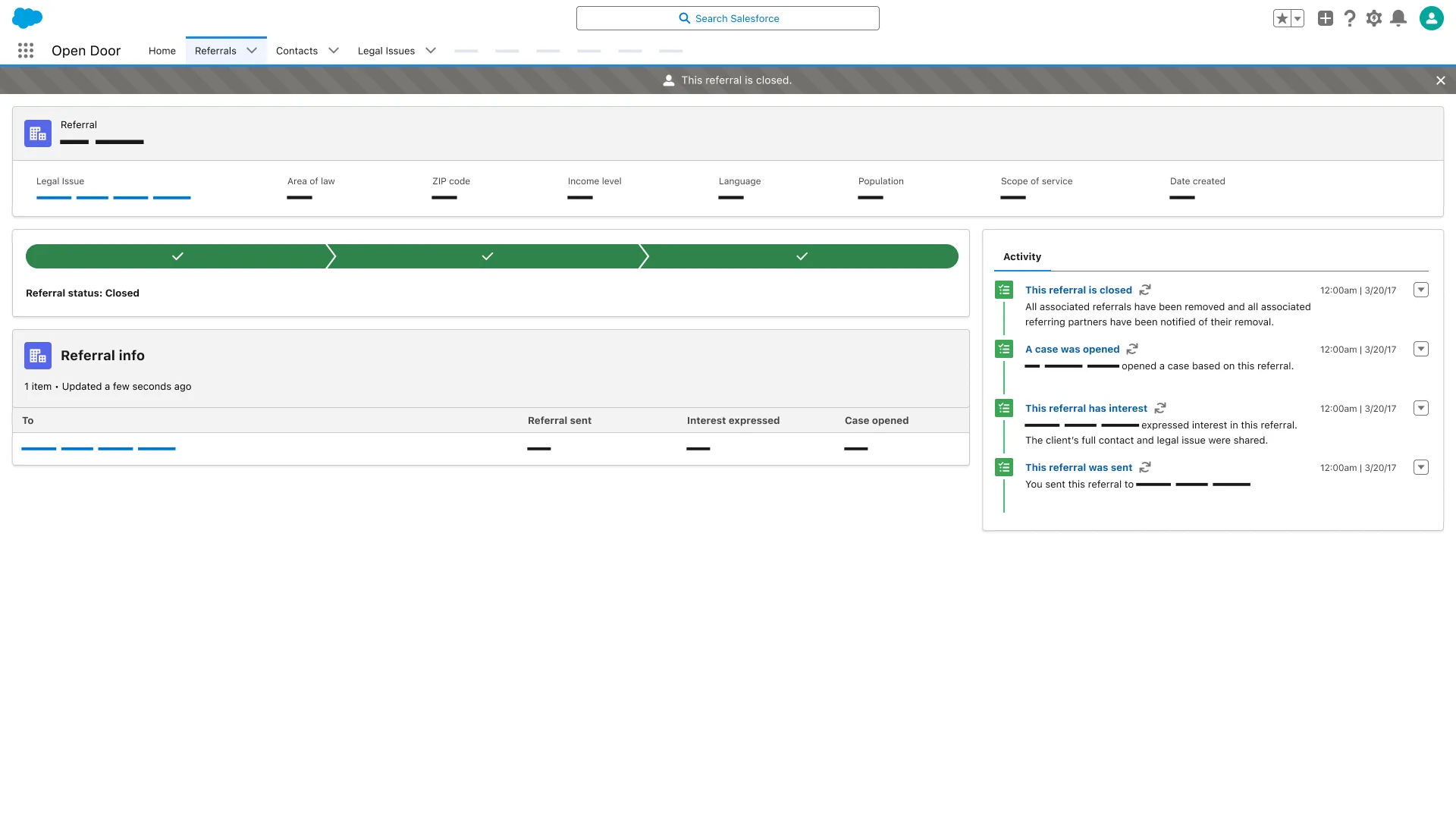
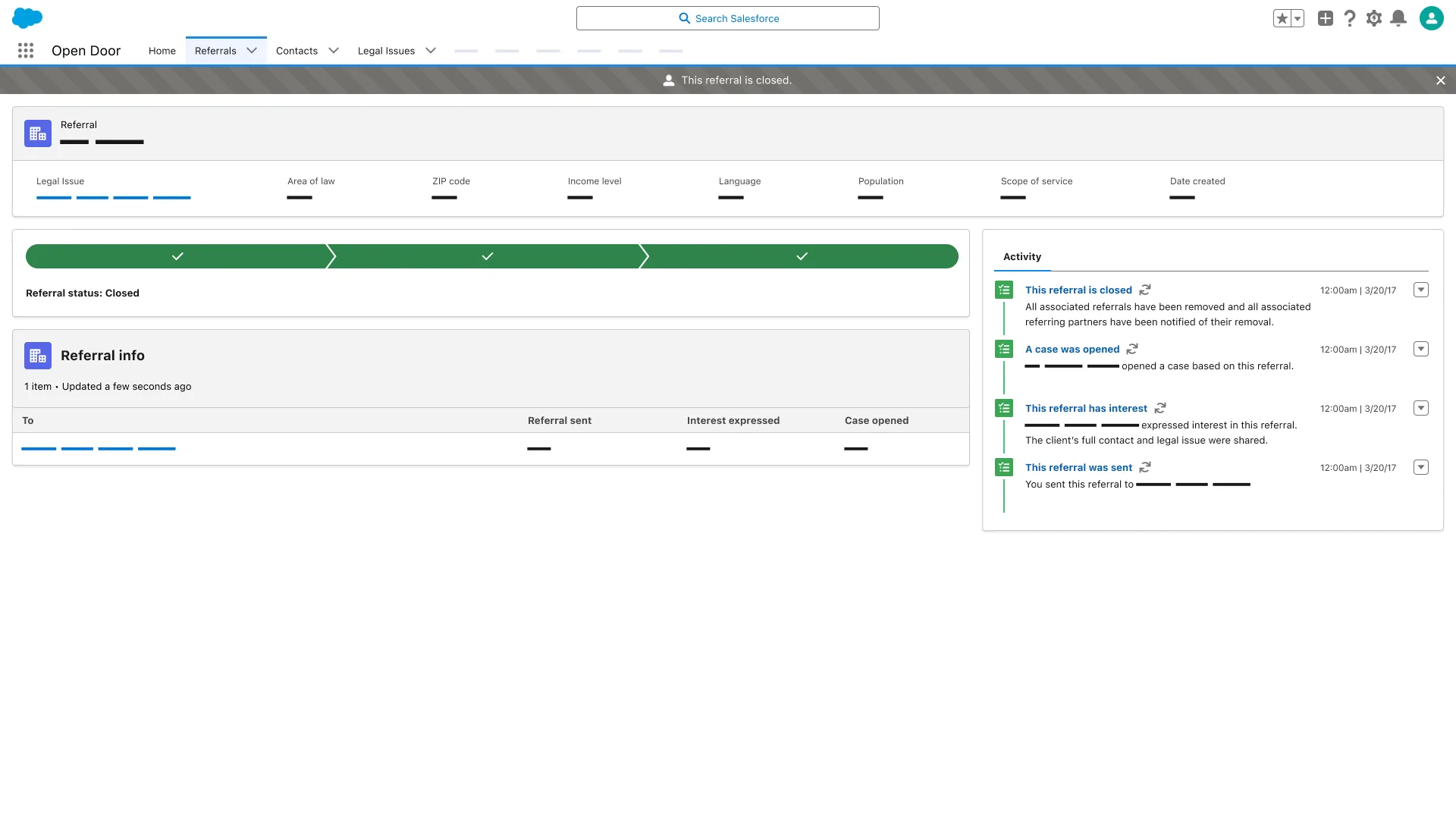
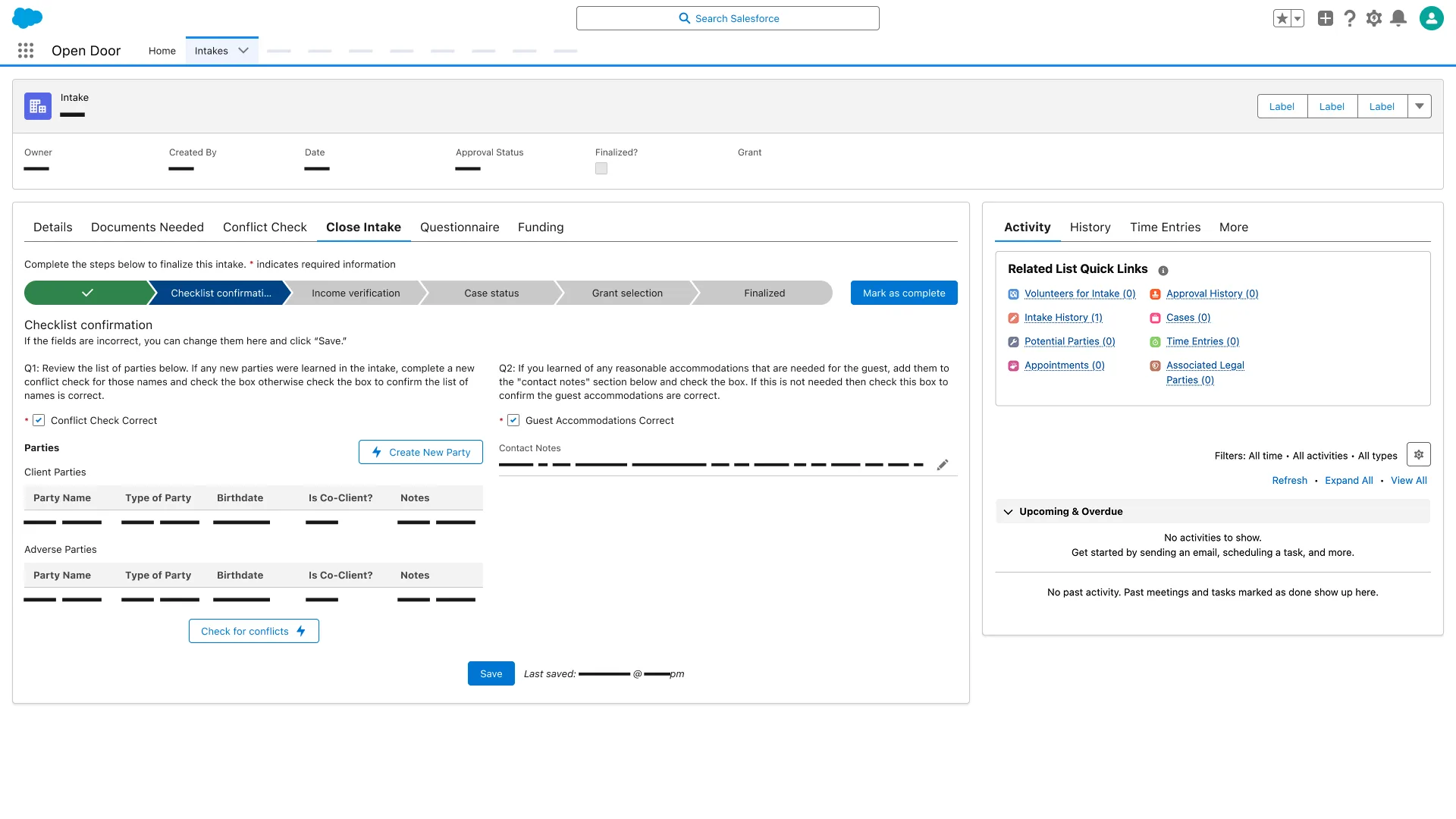
Everything needed to process, act on, or close a referral is present in a single view—a deliberate choice against Salesforce's default related-list navigation for a high-volume, context-switching operation.
Designing for the end state.
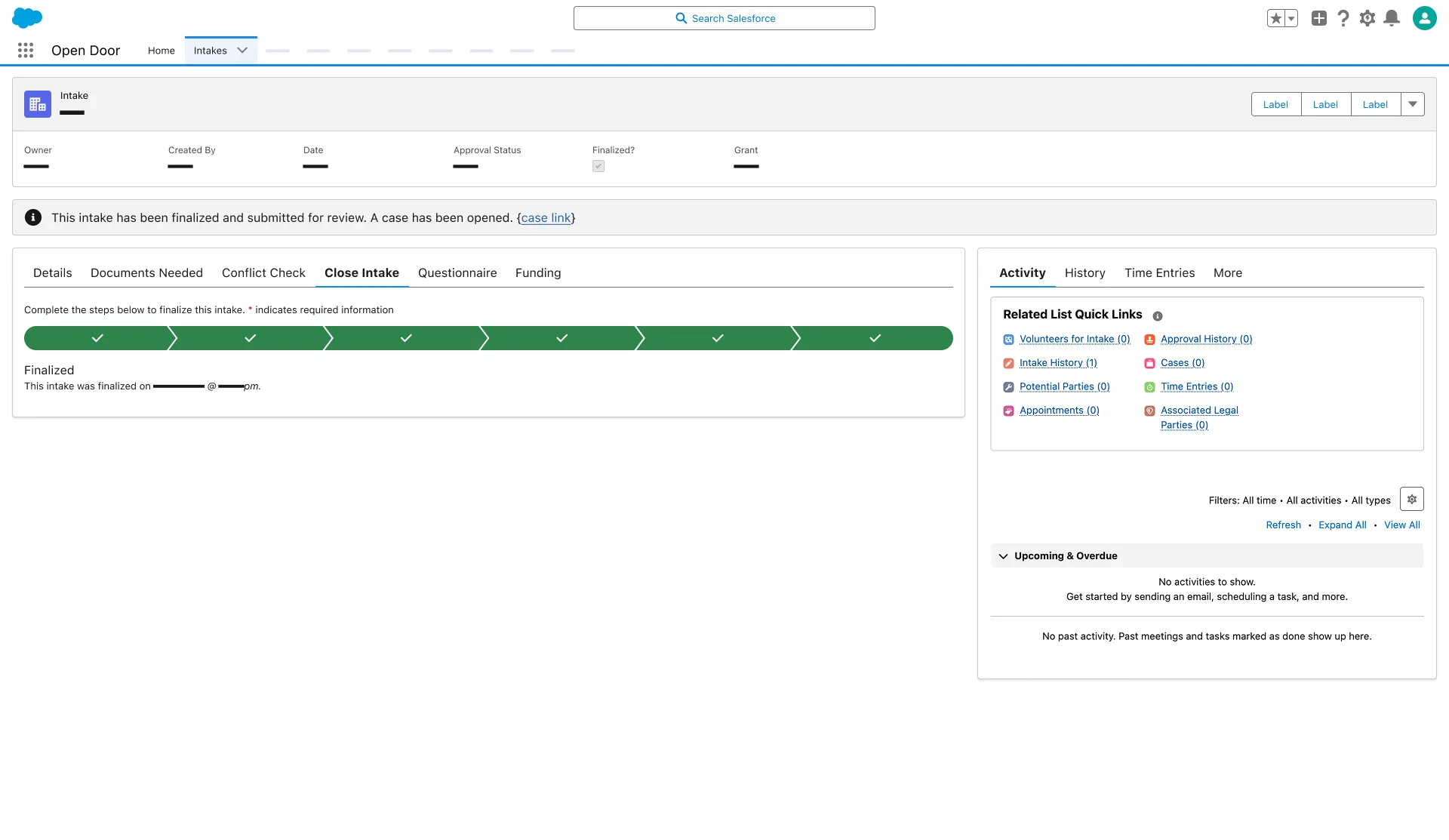
A closed referral still needs to communicate completeness and release attention. Staff should leave a closed referral and return to their queue without uncertainty about whether something was missed.
Phase 2 — Grant management
Why this problem is existential for a nonprofit.
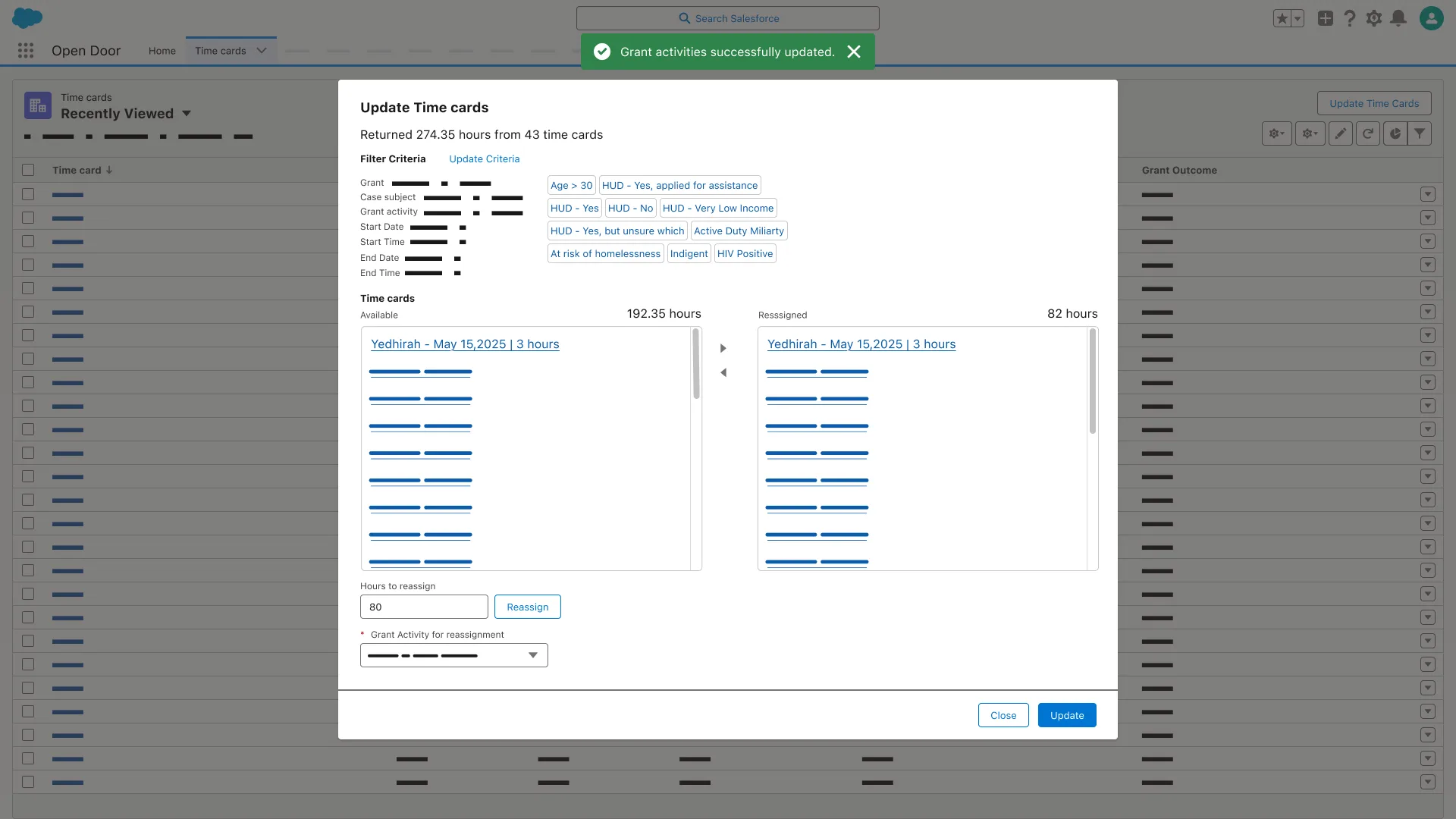
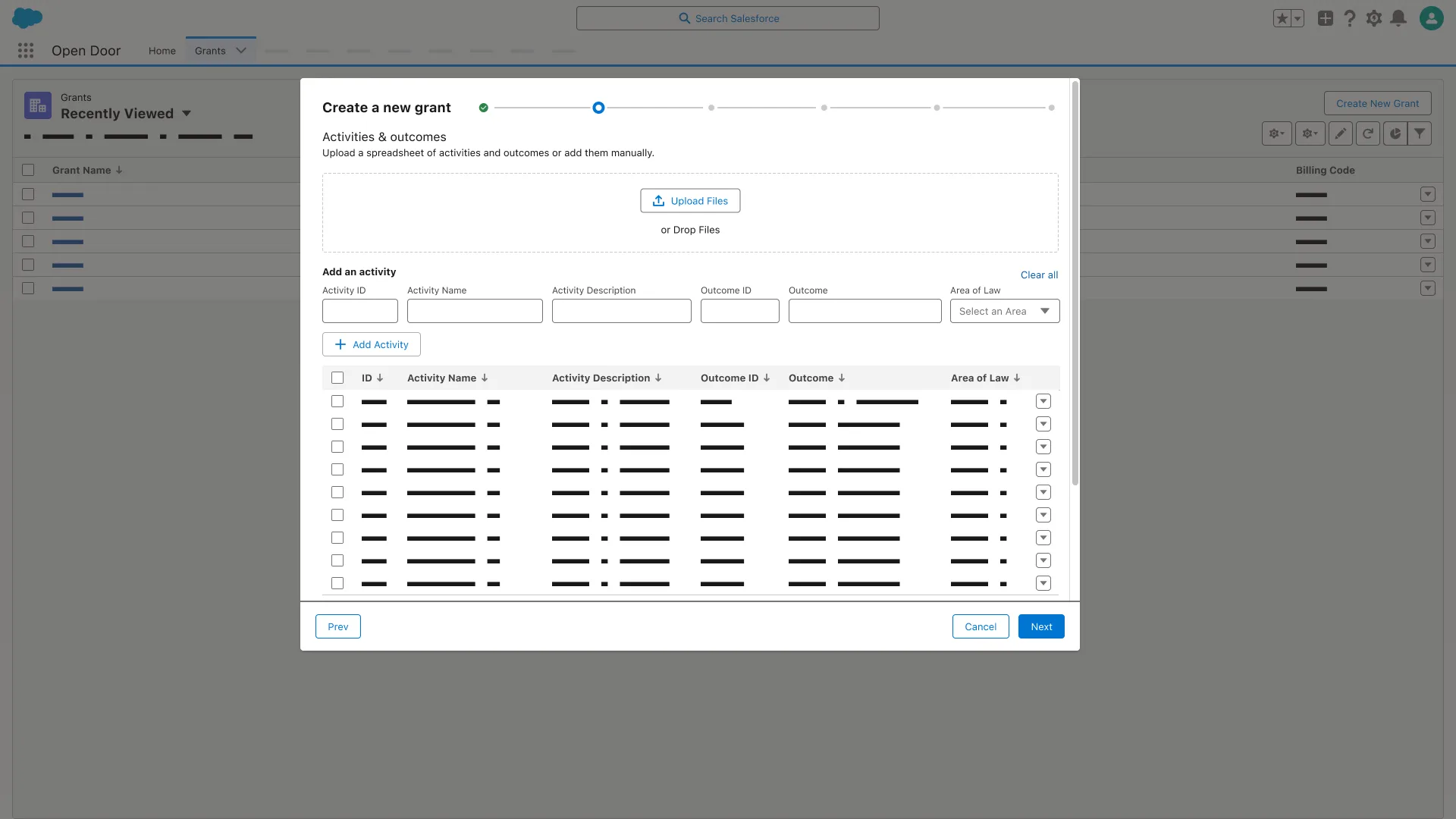
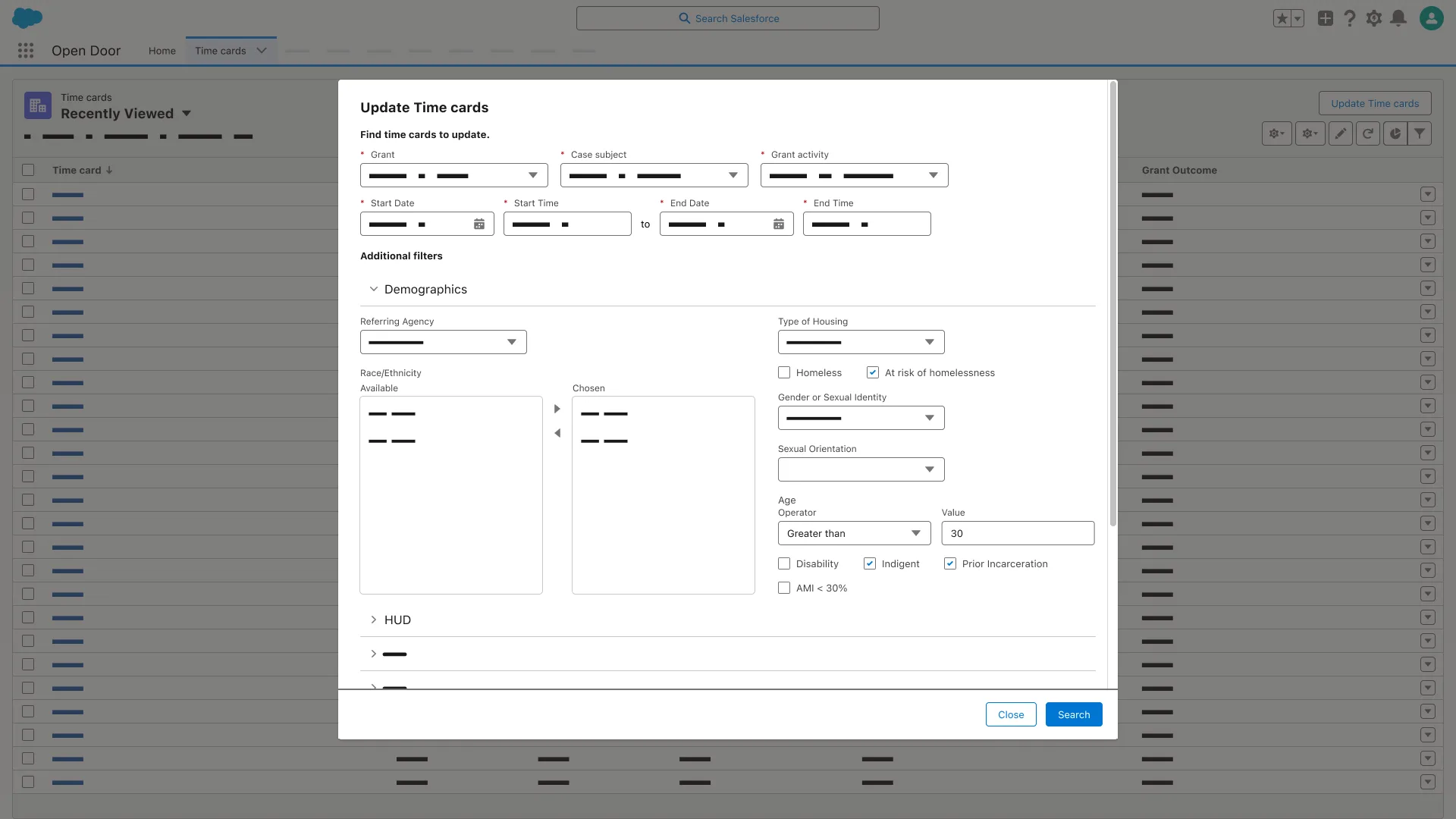
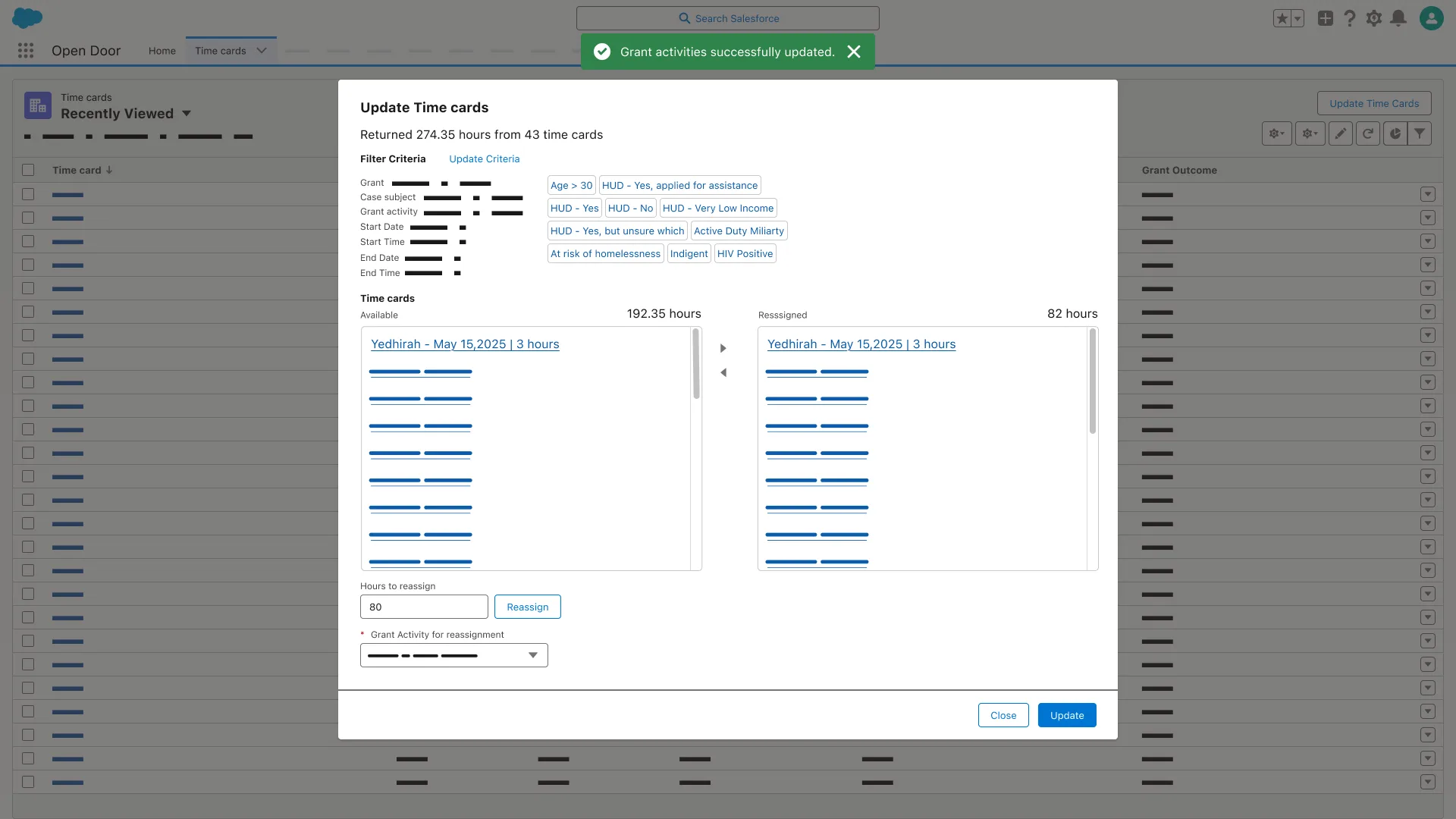
ODL's funding comes from grants—each with unique reporting requirements. Grant administration was a convoluted, multi-step process: manual onboarding, monthly reconciliation across disconnected reports, and significant manual assembly for funder reports. The risk isn't inefficiency—it's reporting inaccuracy and compliance exposure on renewals.
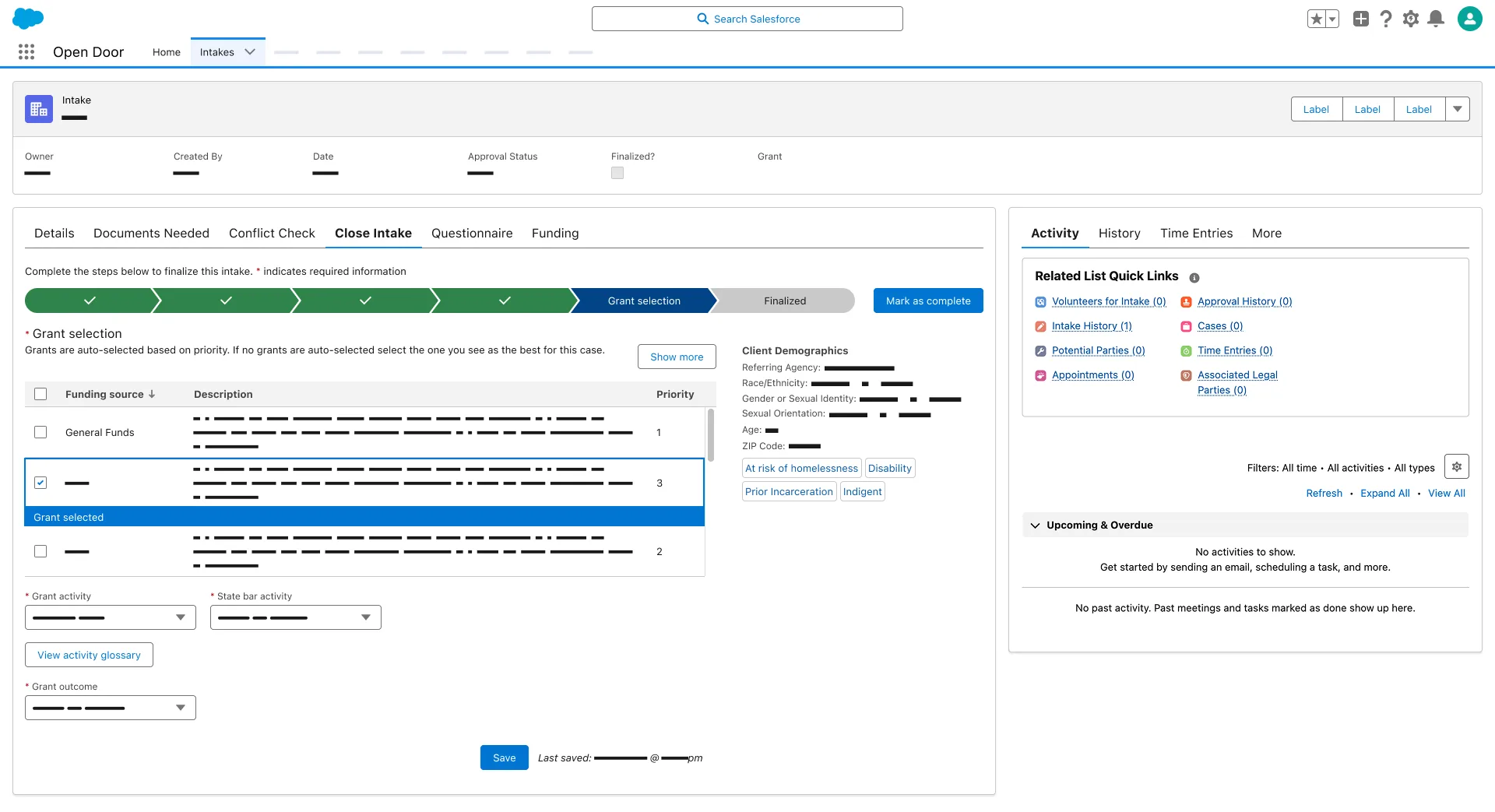
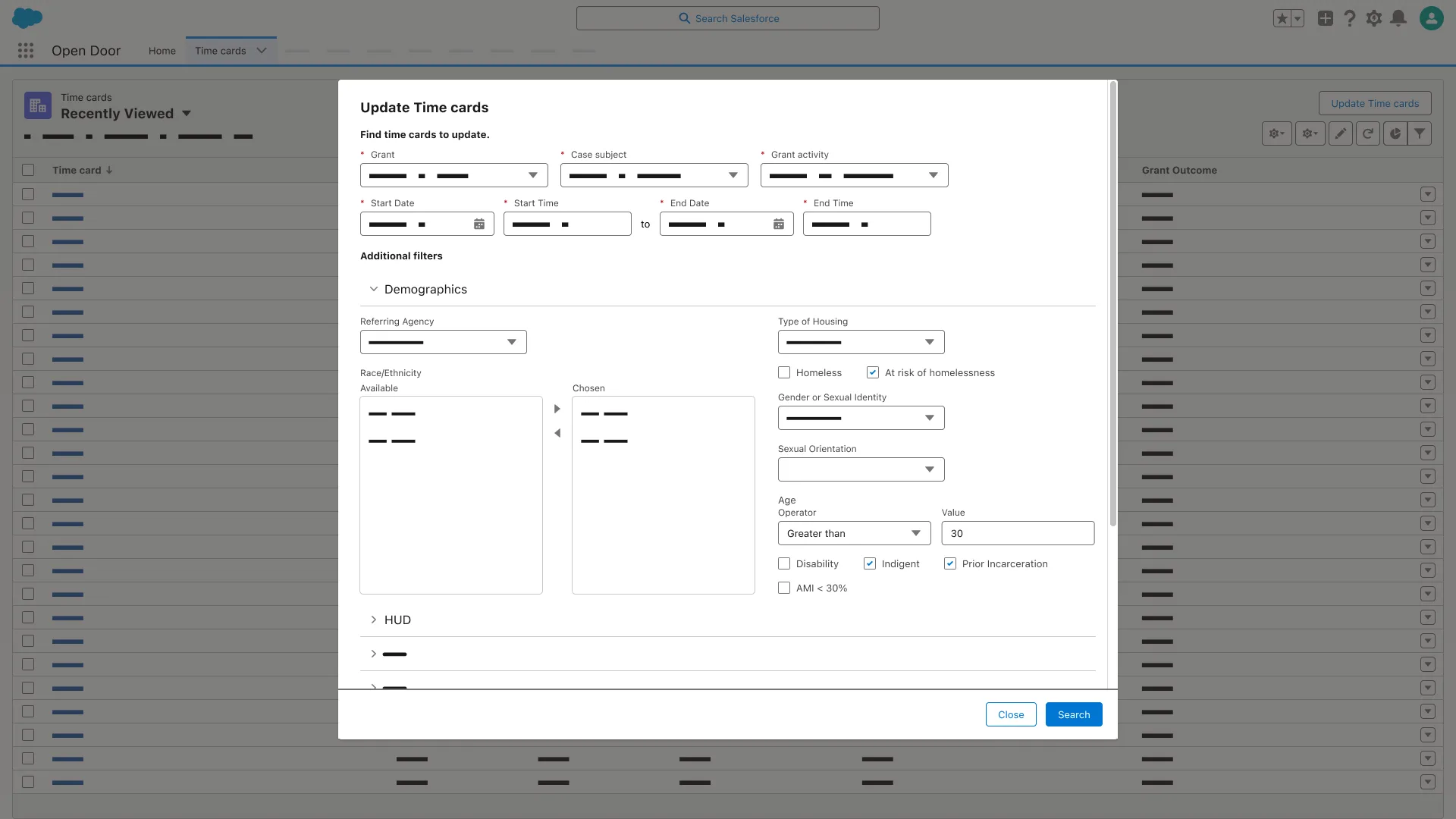
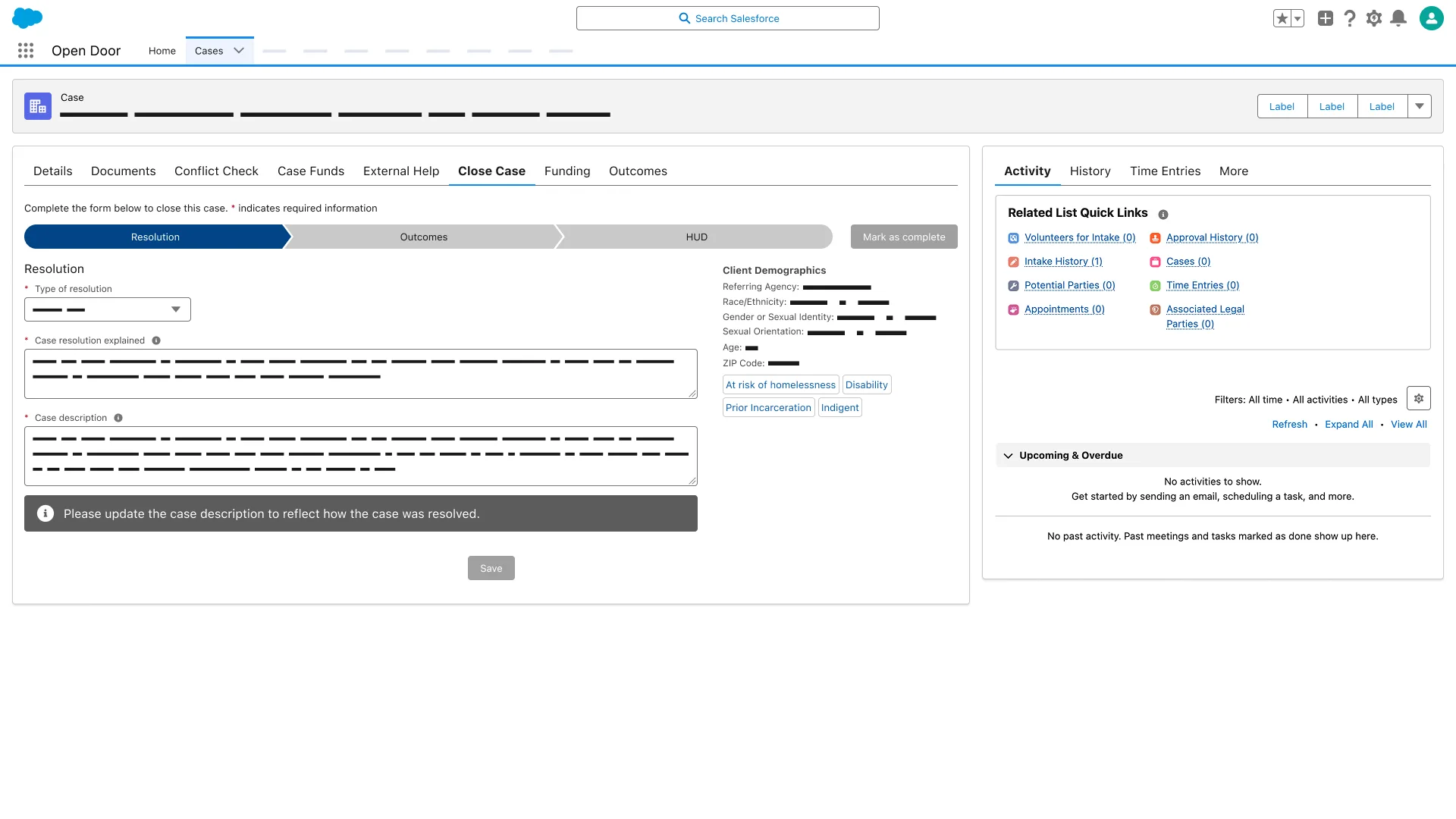
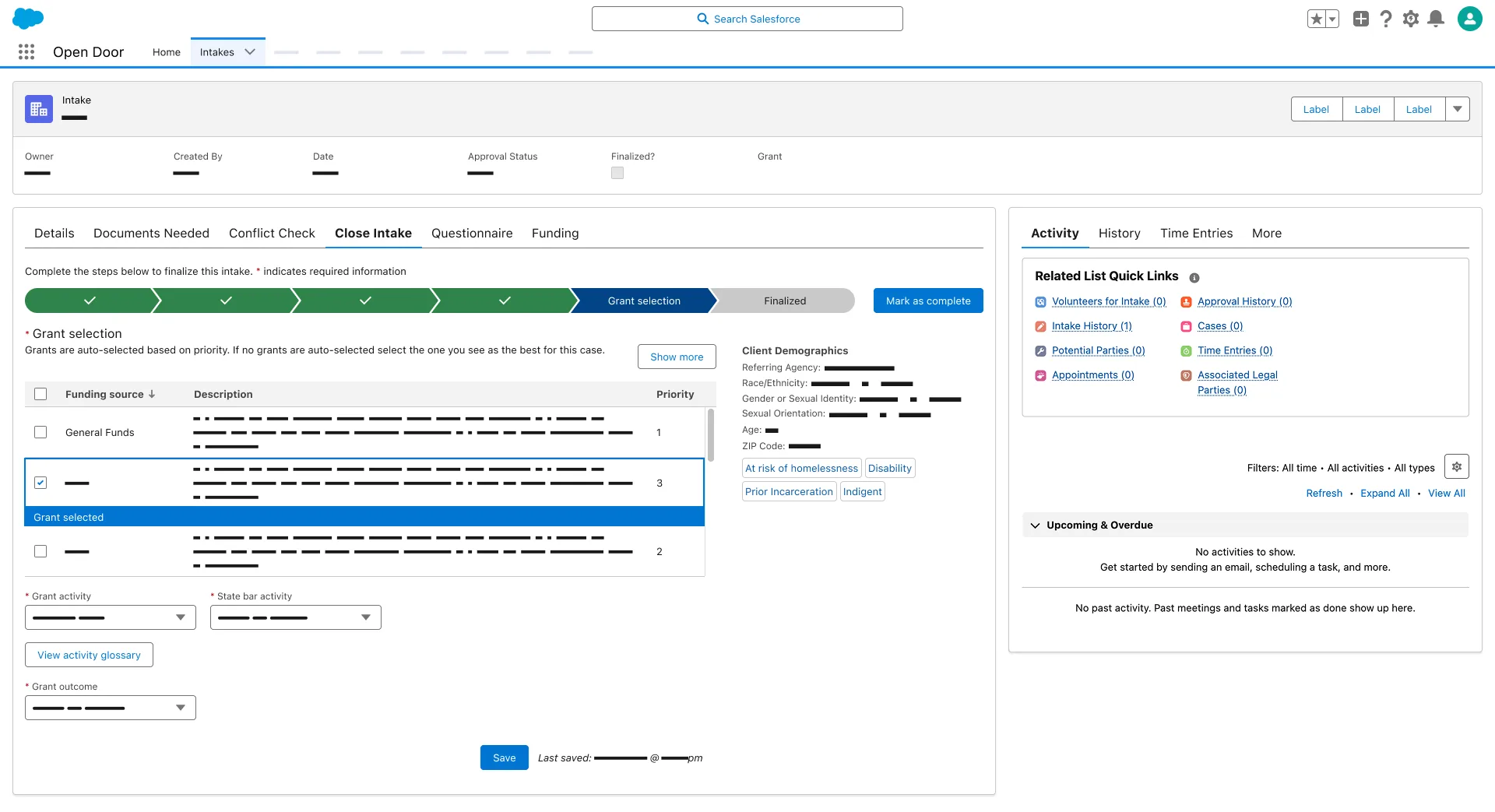
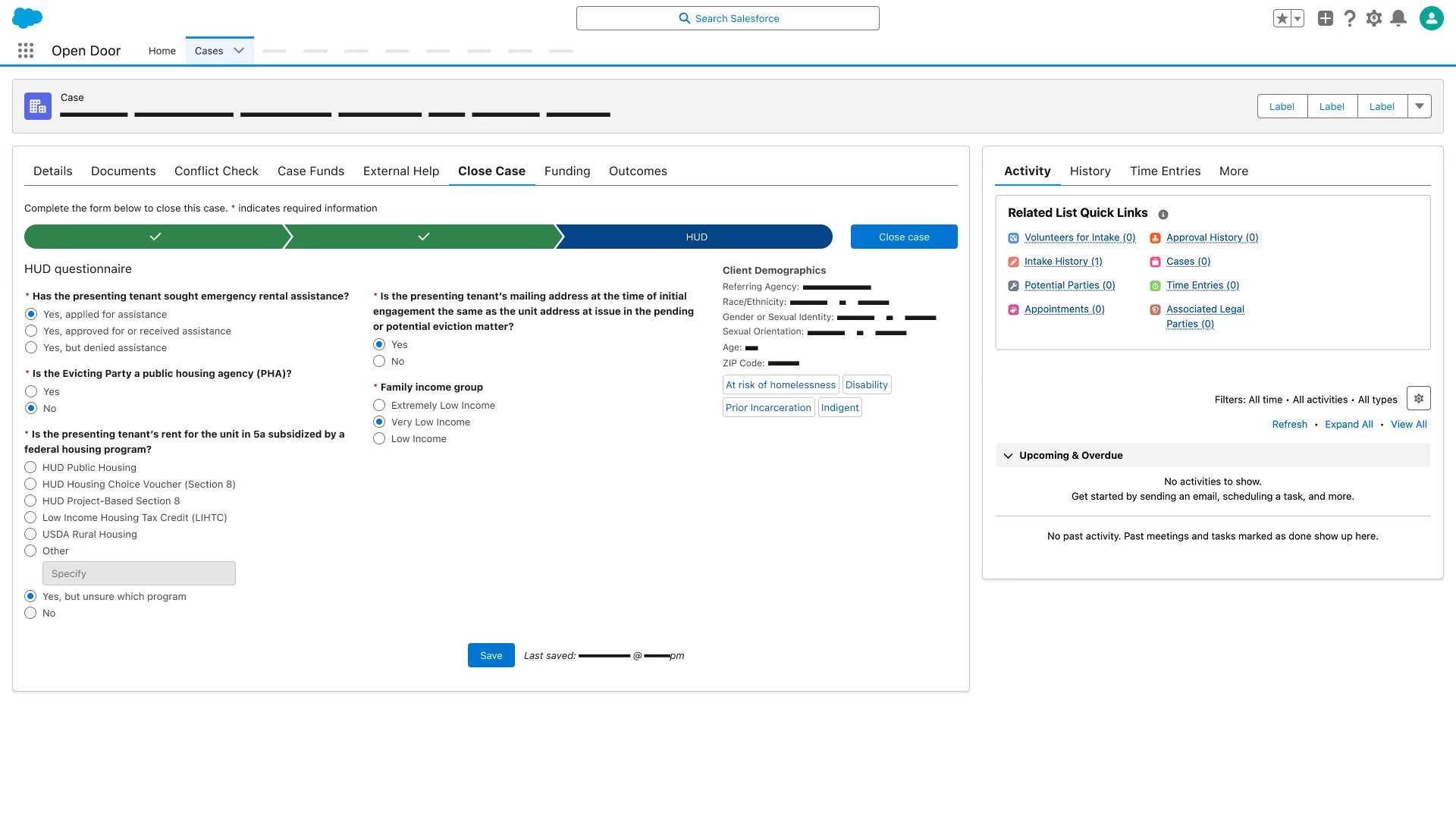
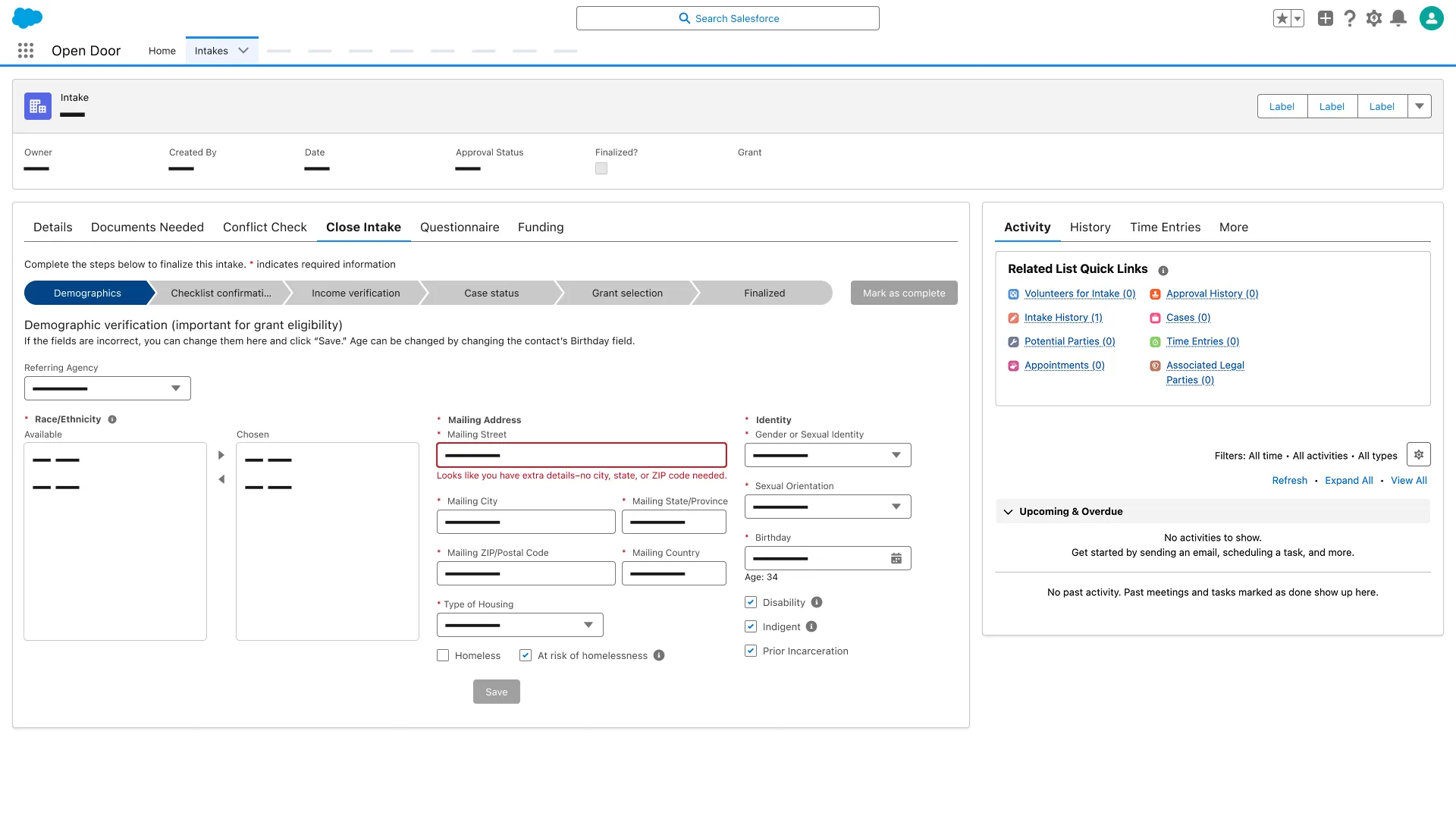
The brief: redesign grant management in Salesforce to reduce administrative overhead by 90%, with as little burden on line staff as possible. The Beneficiary junction object—connecting contacts, grant activities, intakes, cases, and time forecasts—was the architectural linchpin that unlocked per-funder reporting without manual reconciliation.
What this engagement required that most don't
Ethics as a design constraint.
The consequences of a wrong interaction state aren't a bad user experience—they're a professional conduct violation. That forced precision in consent flows, data visibility, and state communication I'd carry into any high-stakes domain work.
Guiding line staff without burdening them.
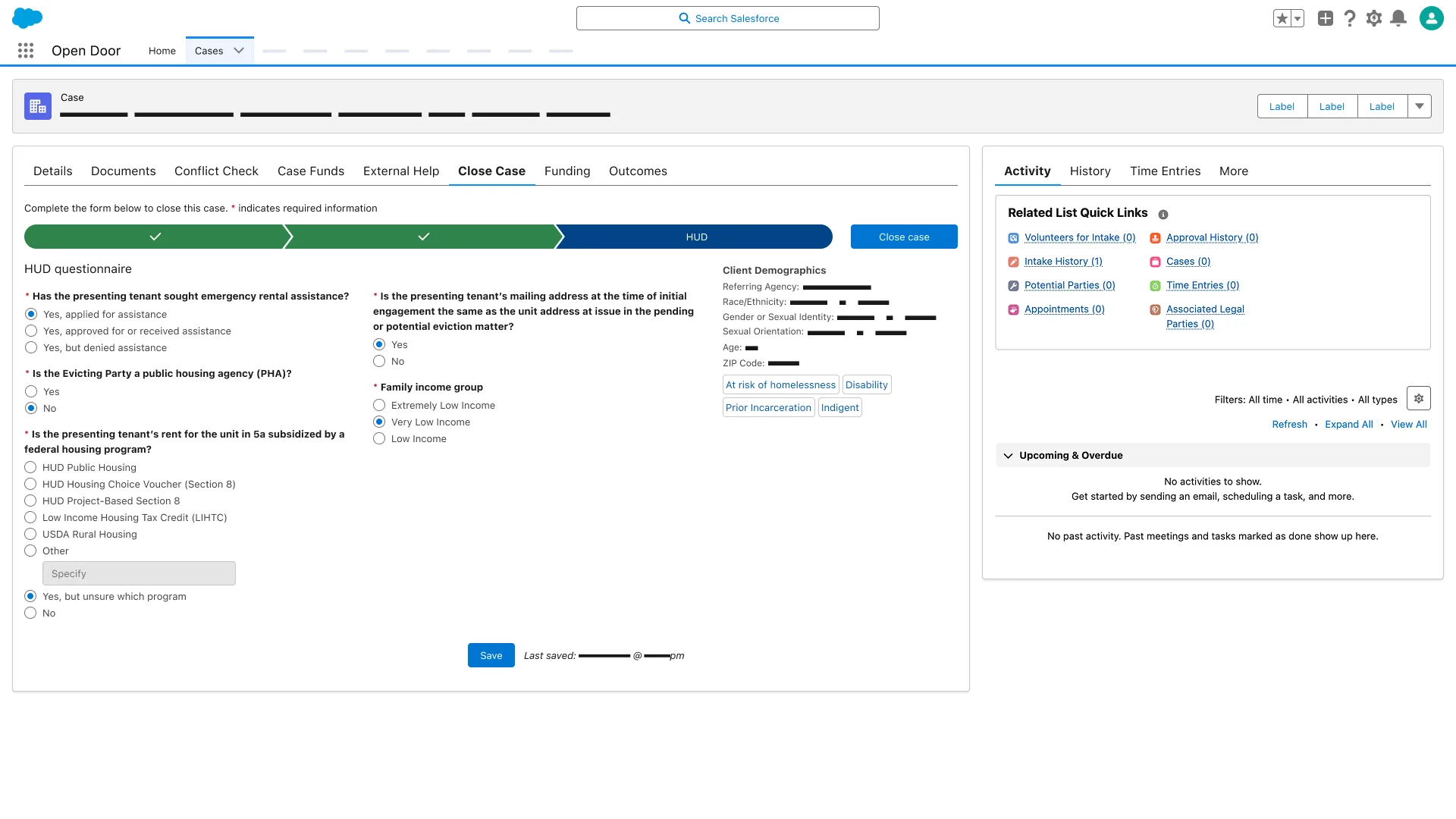
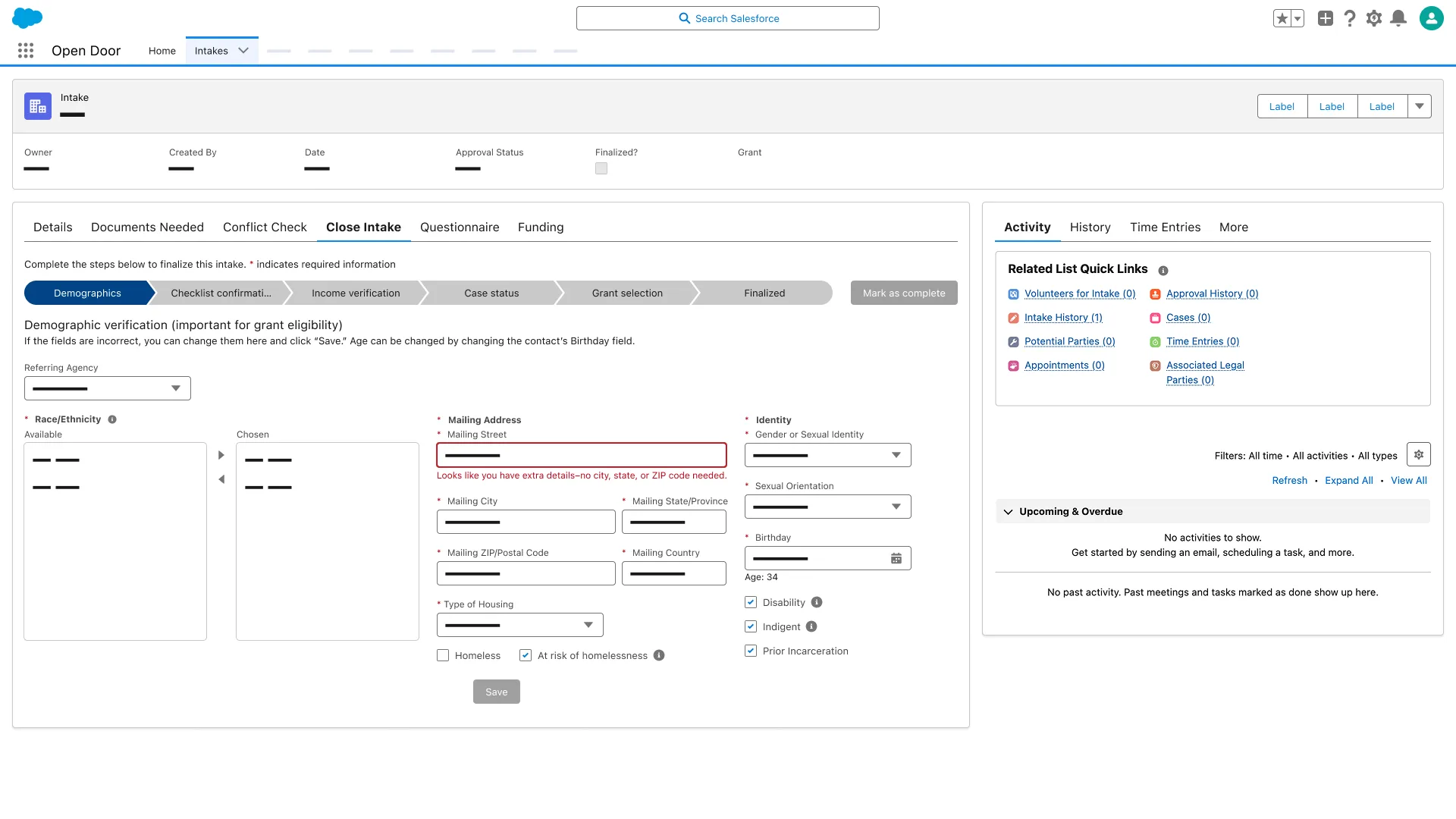
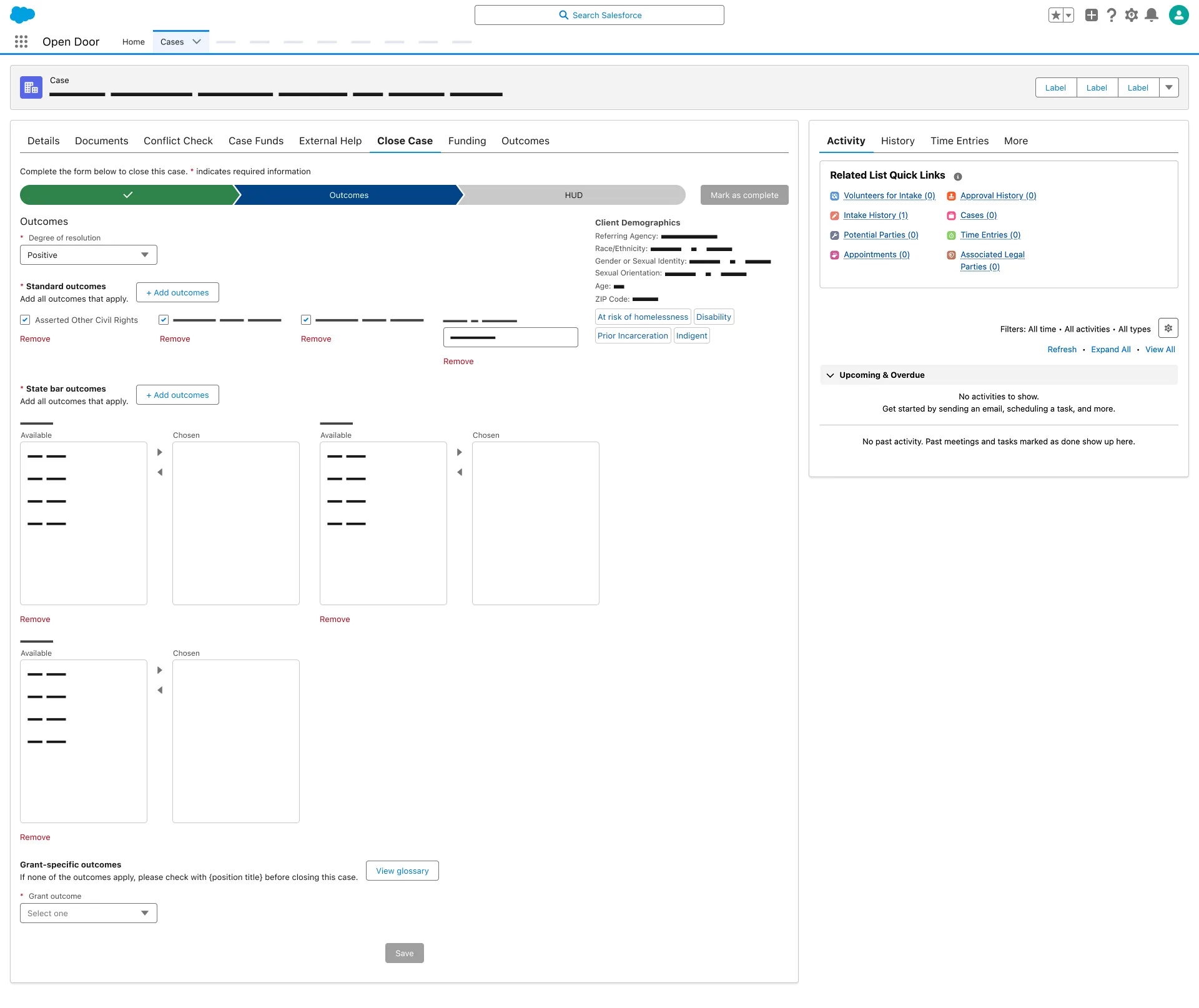
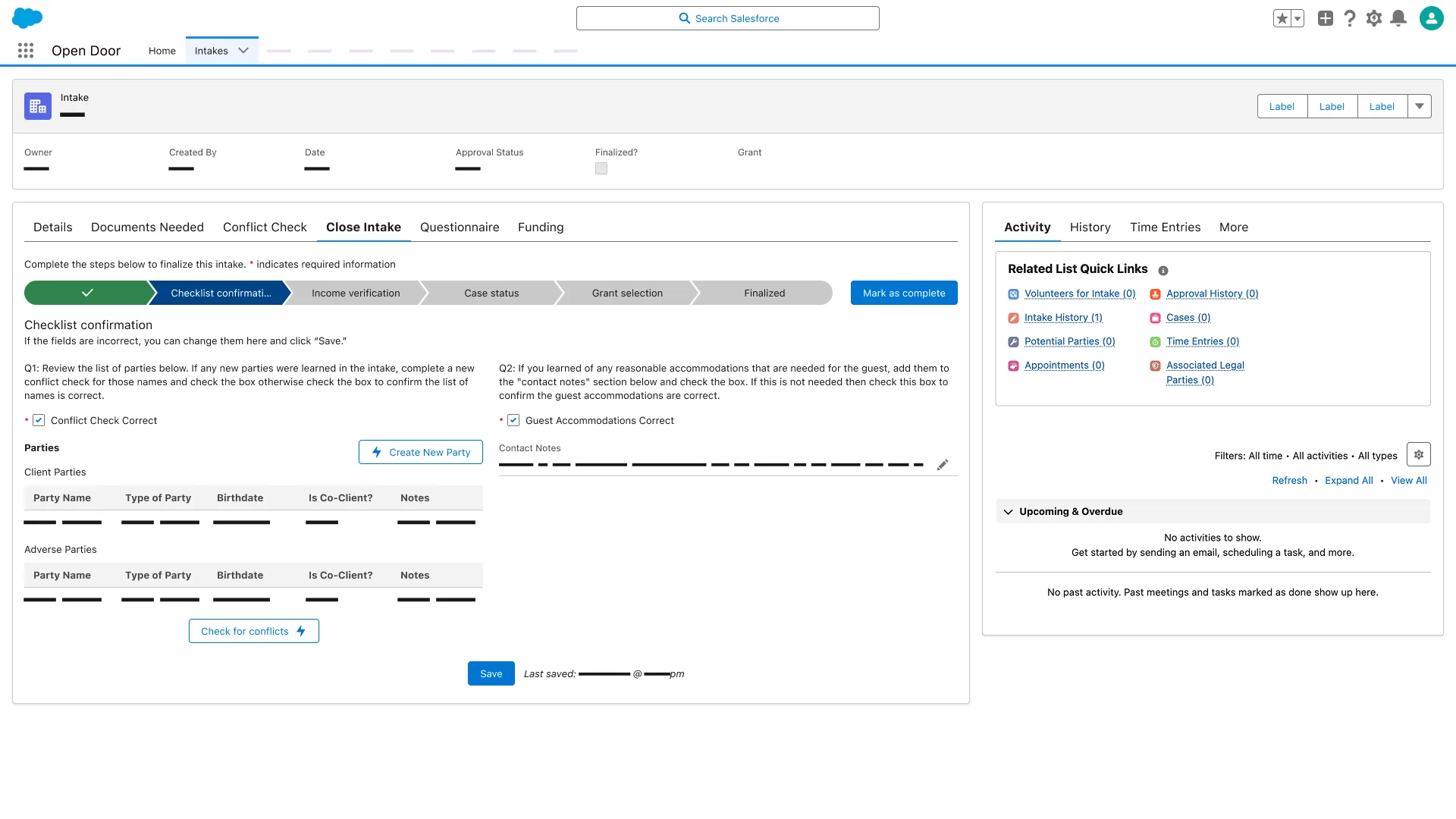
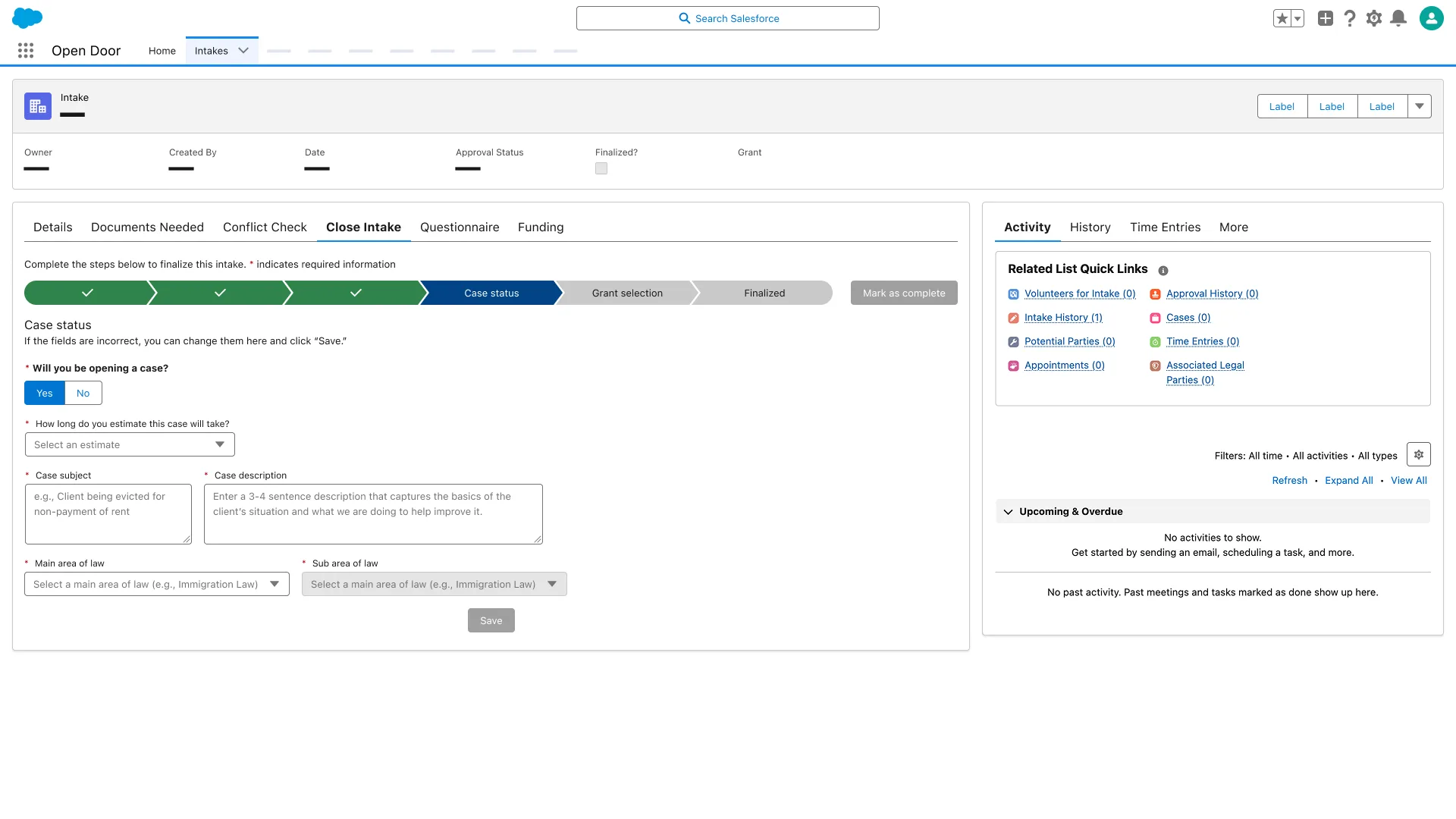
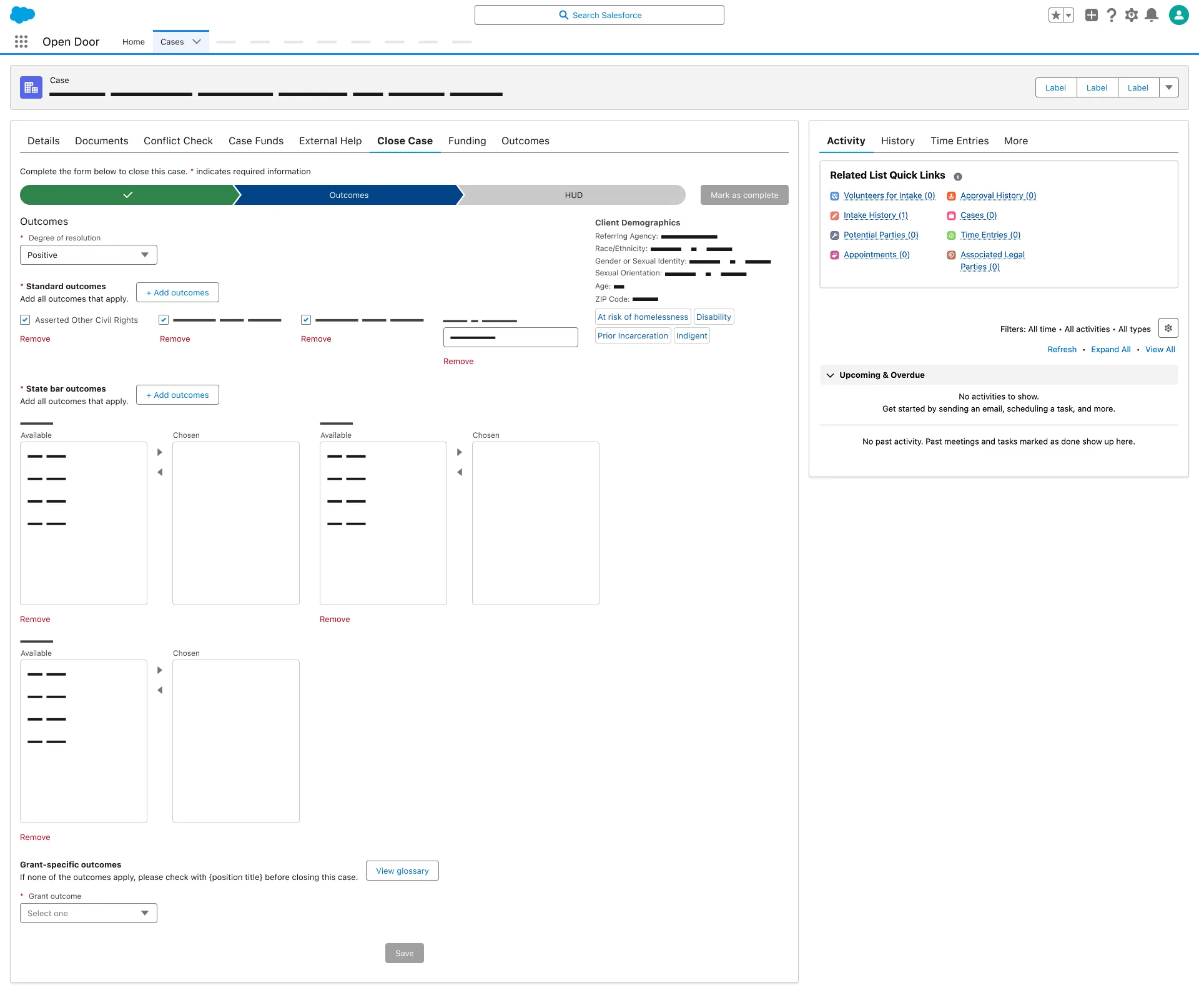
Case managers shouldn't need to think about grant compliance. Intake finalization and case close flows surface grant-relevant fields at the exact moment they're needed—and prevent progression unless required data is entered.
Working upstream of the UI.
The grant data model work required operating at the boundary of UX and systems design—defining what objects needed to exist and how they needed to relate before any screens could be meaningful.
Results
“You're the best designer we've ever had.”
Executive Director Open Door Legal
NPS hit the 120-day target of 80 following the referral feature launch. Redundancies in referral handling were down 16% at measurement. Phase 2 grant management is in QA ahead of deployment—the 90% administration reduction is the production hypothesis.
Your rivals expect you to sleep on your UX. They thrive on what you ignore. Prove them wrong
Next project
21 apps. 1 system. $860M exit.
Unifying apps across a merger
$860M acquisition
Keep scrolling
Continue to Zix